


By Emmanuel Nnadozie Onwubiko
Nigeria’s war against illicit drugs has entered a more aggressive phase, with the National Drug Law Enforcement Agency (NDLEA) taking the battle to drug barons, international trafficking syndicates, clandestine laboratories and criminal financiers.
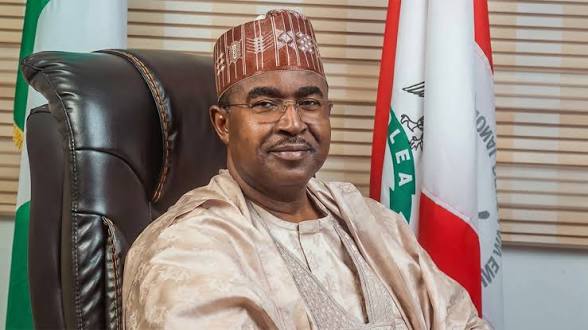
Since Brigadier-General Mohamed Buba Marwa (retd.) assumed leadership of the agency in January 2021, NDLEA has intensified intelligence-led operations, dismantled major drug networks, expanded arrests and prosecutions, and strengthened drug abuse prevention, counselling and rehabilitation programmes.


Since Brigadier-General Mohamed Buba Marwa (retd.) assumed leadership of the agency in January 2021, NDLEA has recorded significant operational milestones, strengthened intelligence-led enforcement, expanded drug abuse prevention and rehabilitation programmes, and increased its engagement with international law enforcement partners.
Yet the scale of these achievements raises an equally important question: how much more could the agency accomplish if its operational capacity, financial resources and institutional independence were strengthened to match the enormity of the drug threat confronting Nigeria?
The answer is important because drug trafficking is no longer simply a law enforcement problem. It is a national security challenge, a public health crisis, a threat to young people, a source of criminal financing and a danger to the integrity of communities, borders and institutions.
The NDLEA’s performance under Marwa has demonstrated that determined leadership, intelligence, professionalism and inter-agency cooperation can produce results. The next challenge is to ensure that the institution is not constrained by inadequate funding, infrastructural deficiencies or bureaucratic limitations as it confronts increasingly sophisticated criminal networks.
A record of arrests, convictions and seizures
One of the most significant milestones of the Marwa-led NDLEA is the scale of enforcement activity recorded within five years.
According to figures released by the agency in January 2026, NDLEA arrested 77,792 drug offenders between 2021 and 2025, including 128 identified drug barons, secured 14,225 convictions and seized 14,847,486.34 kilogrammes of assorted illicit substances.
The figures represent a considerable escalation in the agency’s offensive against drug trafficking and reflect a strategy that increasingly targets major operators rather than concentrating solely on couriers and low-level offenders.
The arrest of drug barons is particularly significant because trafficking networks are often sustained by financiers, suppliers, logistics operators, warehouse owners, distributors and international collaborators who remain insulated from the consequences of the trade.
By pursuing suspects believed to occupy influential positions within trafficking chains, NDLEA has sought to disrupt the organisational structures that sustain the illicit drug economy.
The convictions also indicate that enforcement operations are increasingly being translated into judicial outcomes, although the agency must continue to strengthen prosecution, evidence management and inter-agency collaboration to ensure that arrests produce lasting consequences.
These milestones demonstrate that Nigeria’s anti-drug campaign has moved beyond sporadic interdictions towards a sustained nationwide offensive against drug production, trafficking and distribution.
Taking the fight to international cartels
Perhaps one of the most compelling achievements of the NDLEA under Marwa has been its increasingly sophisticated engagement with international drug networks.
Nigeria’s geographical position, commercial activities, aviation connections, maritime traffic and porous land borders make the country vulnerable to trafficking operations involving multiple jurisdictions.
The agency’s operations have increasingly reflected the understanding that international drug cartels cannot be defeated by routine checkpoint searches or isolated seizures. They require intelligence gathering, surveillance, coordinated raids, forensic investigation, international cooperation and the ability to identify the individuals and organisations controlling the criminal trade.
In May 2026, NDLEA announced the dismantling of a Nigerian-Mexican methamphetamine production syndicate following coordinated operations in Ogun and Lagos states.
The operation led to the shutdown of an industrial-scale clandestine laboratory described by the agency as the largest methamphetamine laboratory discovered in Nigeria, alongside the arrest of the alleged cartel kingpin, three Mexican technical experts and six other local collaborators.
The operation demonstrated the capacity of Nigerian investigators to penetrate sophisticated production networks involving foreign expertise, local collaborators and concealed manufacturing facilities.
The significance of such operations goes beyond the quantity of drugs recovered. The destruction of a production facility, arrest of its operators and disruption of its supply chain potentially prevent the criminal organisation from continuing production, recruiting collaborators and distributing its products.
It also sends a message to international criminal organisations that Nigeria is not an uncontested operating environment for their illicit enterprises.
The agency’s achievements in dismantling such networks should therefore be viewed as strategic security successes, particularly at a time when drug trafficking increasingly intersects with money laundering, cybercrime, organised violence and other criminal activities.
From drug seizures to financial warfare
Another important shift in NDLEA’s strategy under Marwa has been the growing emphasis on dismantling the financial foundations of drug trafficking.
For years, the traditional measure of drug enforcement success was largely determined by the volume of narcotics seized and the number of suspects arrested. But criminal organisations are capable of replacing confiscated consignments and recruiting new couriers if their financial structures, assets and sources of funding remain intact.
The NDLEA has increasingly recognised that the war against drug barons cannot be won by arresting couriers while allowing the financiers and beneficiaries to retain their wealth.
This explains the agency’s growing emphasis on asset tracing, forfeiture, financial investigations and the recovery of proceeds of crime.
Marwa has repeatedly argued that drug trafficking must become a high-risk, low-profit enterprise. This approach requires investigators to follow the money, identify beneficial owners, uncover hidden assets and ensure that criminal wealth does not continue to finance trafficking operations.
The agency’s efforts to strengthen financial investigation capabilities, including training investigators in asset recovery and tracing proceeds of narcotics trafficking, represent an important evolution in Nigeria’s drug control strategy.
The objective should be to dismantle criminal enterprises from within by destroying their economic capacity, making it increasingly difficult for traffickers to finance production, recruit operatives, acquire equipment, bribe officials or establish new routes.
Drug prevention and rehabilitation
A credible drug control strategy cannot be built exclusively around arrests, raids and seizures. It must also address the demand that sustains trafficking.
NDLEA has expanded its War Against Drug Abuse campaign through sensitisation programmes in schools, workplaces, motor parks, religious institutions and communities.
The agency has also strengthened counselling, treatment and rehabilitation interventions for drug users, reflecting the understanding that substance abuse is not merely a criminal justice issue but also a public health challenge requiring professional care.
In its five-year performance report, NDLEA said 32,442 drug users received professional intervention, while 13,735 sensitisation activities were conducted nationwide.
These interventions are important because drug abuse can undermine educational attainment, family stability, productivity, mental wellbeing and the prospects of young people whose futures may be derailed by addiction.
The agency’s prevention and rehabilitation programmes should therefore be sustained and expanded, particularly in communities where substance abuse is increasingly associated with social vulnerability, unemployment, crime and insecurity.
Drug users requiring treatment must not be abandoned to the consequences of addiction. Nigeria needs a stronger network of treatment facilities, trained professionals, community-based support systems and reintegration programmes capable of helping recovering users rebuild their lives.
Institutional reforms and personnel development
The operational achievements of the NDLEA have also been accompanied by efforts to strengthen its personnel, internal structures and professional capacity.
Drug enforcement requires officers who are adequately trained, equipped, motivated and protected. Personnel operating in remote communities, border locations, airports, seaports, warehouses, clandestine laboratories and dangerous trafficking corridors face substantial risks.
Improved training, recruitment, promotion, welfare, operational equipment and accommodation are therefore not peripheral issues. They directly affect the agency’s effectiveness.
The United States International Narcotics Control Strategy Report has previously acknowledged that improved leadership, international cooperation and personnel development contributed to stronger drug interdiction capabilities in Nigeria.
The NDLEA has also pursued improvements in forensic capacity, surveillance, intelligence gathering, specialised operations and technology-driven investigations.
However, these investments require continuity. Training cannot be sustained without resources, equipment cannot be maintained without funding, and personnel cannot be expected to deliver exceptional operational results indefinitely under inadequate working conditions.
The welfare of officers is itself a strategic investment in the national drug war.
Why funding autonomy is now imperative
The NDLEA’s achievements have made a compelling case for stronger and more predictable funding.
The agency is expected to operate across Nigeria’s airports, seaports, land borders, urban centres, rural communities, forests and other difficult terrains. It must intercept drugs, investigate trafficking networks, prosecute offenders, conduct intelligence operations, collaborate with foreign agencies, destroy illicit plantations, provide prevention programmes and support treatment and rehabilitation.
These responsibilities require specialised vehicles, surveillance technology, laboratory equipment, forensic facilities, secure communications, intelligence infrastructure, operational logistics, personnel training and adequate welfare provisions.
They also require the ability to respond rapidly when credible intelligence identifies a major trafficking operation.
A drug cartel does not wait for the next budget cycle before moving its consignment, relocating its laboratory, changing its route or recruiting new operatives. The agency responsible for disrupting these activities must therefore possess sufficient operational flexibility to respond to threats in real time.
Marwa has previously acknowledged funding constraints affecting the implementation of the National Drug Control Master Plan. In January 2025, while defending the agency’s budget, he sought additional support for capital expenditure and drew attention to infrastructure challenges, including the need for barracks and improved accommodation for personnel.
The 2021–2025 National Drug Control Master Plan evaluation also identified inadequate domestic resources as a constraint on full implementation, with external technical and financial assistance helping to bridge some funding gaps.
Such dependence on supplementary support is not a sustainable foundation for an agency confronting a permanent and evolving national security threat.
The case for funding autonomy should therefore be treated as a matter of institutional capacity, not a request for unchecked spending powers.
A stronger funding framework could provide NDLEA with predictable operational resources, protected allocations for critical programmes, more reliable capital funding and greater flexibility to deploy resources against emerging threats.
It should also be accompanied by transparent reporting, independent audits, legislative oversight, performance benchmarks and strict accountability for expenditure.
Financial autonomy must never mean the absence of scrutiny. Rather, it should mean that the agency can plan and execute legitimate operations efficiently without being unnecessarily constrained by administrative delays, while remaining accountable to Nigerians.
A stronger NDLEA for a more dangerous drug economy
Nigeria’s drug problem is evolving. Traffickers are exploiting new routes, changing substances, adopting sophisticated concealment methods and increasingly operating through international networks.
Synthetic drugs, clandestine laboratories, precursor chemicals, digital communications, financial concealment and transnational criminal partnerships require a law enforcement response that is equally sophisticated.
The next phase of NDLEA’s work must involve deeper intelligence cooperation, stronger forensic laboratories, improved border surveillance, specialised financial investigators, expanded rehabilitation services and enhanced technological capacity.
The agency must also strengthen collaboration with the judiciary, prosecutors, customs authorities, immigration services, the police, financial intelligence institutions, health agencies and international partners.
These are not optional investments. They are necessary tools for a drug enforcement institution operating against criminal organisations with substantial financial resources and international connections.
The next milestone must be institutional strength
The achievements recorded under Marwa offer Nigeria an opportunity to consolidate its drug control strategy and build an institution capable of sustaining the gains beyond the tenure of any individual leadership.
The 2026–2030 National Drug Control Master Plan provides a framework for the next phase, but its success will depend heavily on political commitment, funding, implementation and coordination.
Nigeria should not celebrate the dismantling of drug cartels while leaving the institution responsible for confronting them struggling for the resources required to sustain its operations.
The NDLEA has demonstrated that when leadership is focused, personnel are motivated and intelligence is properly deployed, significant results are possible. The challenge now is to institutionalise those gains through stronger funding arrangements, modern infrastructure, professional development and operational independence backed by accountability.
The fight against illicit drugs is a long-term national security undertaking. It cannot be won through temporary enthusiasm, occasional budgetary support or episodic interventions.
If Nigeria expects the NDLEA to dismantle global drug cartels, disrupt criminal finances, protect its borders, safeguard its young people and reduce the devastating consequences of substance abuse, then the country must equip the agency to do so.
The milestones achieved under Marwa should not merely be celebrated as a record of past successes. They should become the foundation for a stronger, better-funded and more capable NDLEA—one able to confront the drug cartels of today and anticipate the threats of tomorrow.
The central message is: Marwa’s NDLEA has demonstrated what an adequately driven drug enforcement institution can achieve; Nigeria must now demonstrate that it is willing to adequately resource the institution to sustain and surpass those achievements.
EMMANUEL NNADOZIE ONWUBIKO is the founder of HUMAN RIGHTS WRITERS ASSOCIATION OF NIGERIA and was a NATIONAL COMMISSIONER OF THE NIGERIAN NATIONAL HUMAN RIGHTS COMMISSION.