

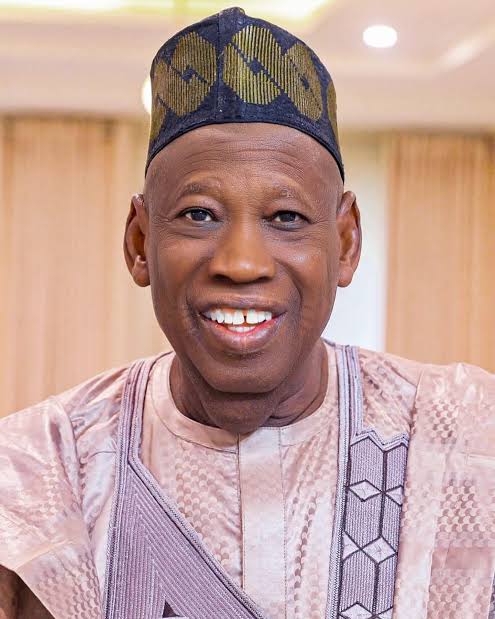

Former Kano State Governor, Abdullahi Ganduje, has questioned how Nigeria can reform its judiciary if those expected to drive the process are themselves apprehensive about the institution.
Ganduje raised the concern on Tuesday at the fifth national conference of the Forum of Former Deputy Governors of Nigeria (FFDGN) at Abuja Continental Hotel, Abuja, where he spoke on the challenges of institutional reform and sustainable development.
“I wonder who will reform the judiciary in this country because the person expected to reform it may also be afraid of the judiciary, having to rely on the same institution,” he said.
Although he did not identify specific judicial officials or cite particular cases, his remarks drew attention to the challenges of reforming institutions that play a central role in democratic governance and accountability.
Ganduje also questioned the ideological differences among Nigeria’s political parties, arguing that the absence of clear distinctions had encouraged politicians to switch platforms in pursuit of political opportunities.
He said political affiliation should be driven by shared principles and values rather than personal interests.
The former governor further criticised the tendency of successive administrations to abandon projects initiated by their predecessors, noting that the practice undermined continuity in governance.
He observed that incoming governors sometimes reversed existing projects even when they belonged to the same political party as their predecessors.
“Continuity leads to consolidation, and consolidation leads to sustainable development,” Ganduje said.
He argued that governments needed to build on existing achievements rather than repeatedly discard previous initiatives, stressing that continuity was essential to long-term development.
On national unity, Ganduje urged Nigerians to see the country’s ethnic diversity as an asset rather than a source of division.
He recalled that political leaders demonstrated nationalist commitment during the struggle for independence but said political competition increasingly took on ethnic dimensions after independence.
He called for renewed commitment to national cohesion and the strengthening of democratic institutions.
Ganduje declined to comment extensively on the Independent National Electoral Commission and security agencies, saying other speakers at the conference would address those issues.
The conference was themed, “Rethinking Nation-Building: Bridging the Leadership-Citizen Disconnect Through Orientation, Attitude, Character, Culture and Tradition Towards Sustainable Development.”
His remarks placed judicial reform, political party ideology and continuity in governance among the issues confronting Nigeria’s efforts to strengthen institutions and improve public confidence in leadership.