


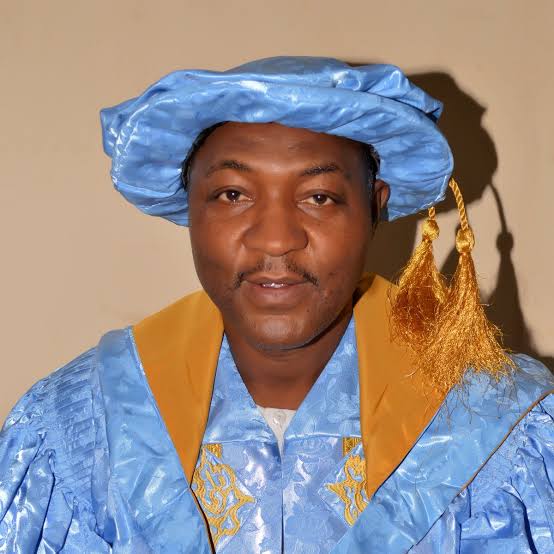
By Lamara Garba
Former Vice-Chancellor of Bayero University, Kano, Professor Sagir Adamu Abbas, has called for a fundamental shift in efforts to tackle the growing number of out-of-school children in Northern Nigeria, warning that the crisis now poses a grave threat to the region’s security, economic prosperity and future development.
Speaking at a one-day roundtable conference organised by Ahmadu Bello University (ABU), Zaria, Professor Abbas said the challenge had outgrown the education sector and should now be treated as a national development emergency requiring coordinated action from governments, traditional and religious institutions, universities, civil society organisations, development partners and local communities.

The conference, held at Yusuf Bala Usman Hall on the university’s Samaru campus 90th, focused on developing practical and sustainable solutions to one of Northern Nigeria’s most pressing social challenges.
Delivering a keynote address titled “Out-of-School Children in Northern Nigeria: Understanding the Context, Rethinking the Challenge and Charting a Transformative Policy Agenda,” the former Vice-Chancellor argued that increasing school enrolment alone would not solve the problem.
Instead, he advocated targeted, context-specific interventions that address the diverse factors preventing children from accessing education.
According to him, poverty, insecurity, displacement, disability, harmful socio-cultural practices, weaknesses in the education system and inadequate public policies continue to keep millions of children outside the classroom.
Professor Abbas observed that previous interventions had achieved limited success because they treated out-of-school children as a single group, despite the differing circumstances that keep them away from school.
He identified several categories of affected children requiring tailored interventions, including those who have never enrolled in school, school dropouts, Almajirai and pupils in non-integrated Qur’anic schools, nomadic and pastoralist children, internally displaced children, children living with disabilities, girls affected by gender-based barriers, and children engaged in hawking, domestic work and other forms of child labour.
He urged policymakers to abandon “one-size-fits-all” solutions and instead adopt strategies that respond to the unique realities of each category.
Professor Abbas warned that allowing millions of children to remain outside the education system would deepen poverty, fuel unemployment, increase insecurity and crime, and expose vulnerable youths to violent extremism and social exclusion.
“No society can attain sustainable development while a significant proportion of its children are denied access to quality education,” he said.
The education scholar further noted that Northern Nigeria has a long-standing tradition of scholarship rooted in Islamic civilisation, stressing that the current crisis should not be interpreted as a rejection of education but rather as a consequence of widening socio-economic challenges and the disconnect between traditional learning systems and modern education.
Quoting data from UNESCO, Abbas said more than 250 million children and young people are currently out of school globally, while Nigeria accounts for over 18 million, with nearly two-thirds of the figure concentrated in the North-West and North-East.
He maintained that reversing the trend would require sustained political commitment, increased investment in education, institutional reforms, stronger community participation and strategic collaboration among all stakeholders.
Despite the scale of the challenge, Professor Abbas expressed optimism that Northern Nigeria could transform the crisis into an opportunity for human capital development by ensuring that every child, irrespective of background, gender or circumstance, has access to quality education.
The roundtable attracted academics, policymakers, government officials and development partners, who explored practical policy options for tackling the region’s out-of-school children crisis and improving educational outcomes.
