

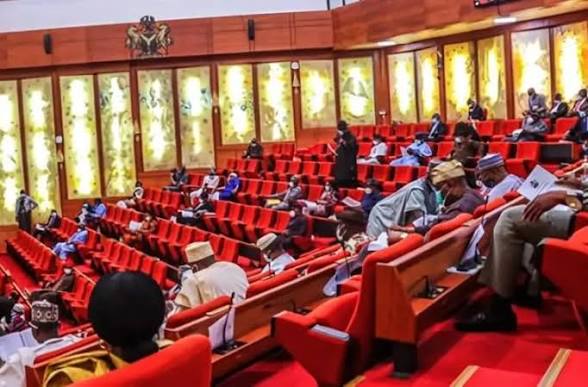
The Senate on Thursday approved another extension of the capital component of the 2025 Appropriation Act, pushing its implementation deadline from June 30 to September 30, 2026, in what critics may see as a continuation of the government’s growing reliance on budget carryovers.
The decision followed a closed-door executive session during which lawmakers confronted a familiar problem: billions of naira appropriated and released for projects under the 2025 budget remain unspent, while numerous projects are still awaiting completion.
Senate Chief Whip Tahir Monguno, who sponsored the motion, told lawmakers that procurement delays, administrative bottlenecks, and implementation challenges had slowed the execution of projects across Ministries, Departments and Agencies (MDAs).

His argument was straightforward: without another extension, critical projects could be abandoned, public funds already committed could be wasted, and ongoing government interventions could grind to a halt.
But the latest extension also highlights a recurring feature of Nigeria’s budget process—the steady migration of projects and spending obligations from one fiscal year into another.
Chairman of the Senate Committee on Appropriations, Senator Solomon Olamilekan Adeola, reminded lawmakers that when the 2025 budget was presented, there was an understanding that part of its implementation would spill into the following year. However, implementation targets were not met, forcing the National Assembly to first extend the budget to June 30, 2026.
Now, with significant obligations still outstanding, lawmakers have approved yet another carryover period, allowing the 2025 budget to remain active until the end of September 2026.
Adeola acknowledged that payments were ongoing but said a substantial portion of obligations remained unsettled.
“There is a need to extend this budget beyond June 30, 2026, to September 30, 2026,” he told senators, expressing hope that outstanding payments would be completed within the new timeline.
The motion received support from Senator Victor Umeh, who argued that ongoing projects captured under the 2025 Appropriation Act should not be left hanging because of an expired implementation window.
Following a voice vote conducted by Senate President Godswill Akpabio, the chamber overwhelmingly approved the extension.
Akpabio said the move was necessary because payments linked to the budget would otherwise have stopped midway.
“The payment would have stopped halfway if this was not done,” the Senate President said before directing that the resolution be transmitted to the Executive.
The extension means that a budget originally designed for the 2025 fiscal year will continue to be implemented well into the final quarter of 2026, further blurring the lines between annual budget cycles.
While lawmakers insist the decision is necessary to protect projects already underway and ensure value for public funds, the development is likely to renew debate about Nigeria’s persistent budget carryover culture, where fiscal deadlines are repeatedly stretched to accommodate projects that fail to meet their original implementation schedules.
For many Nigerians, the question remains whether annual budgets are truly annual plans—or increasingly becoming rolling spending programmes that routinely outlive the years for which they were designed.
