

By: Ismail Yahaya
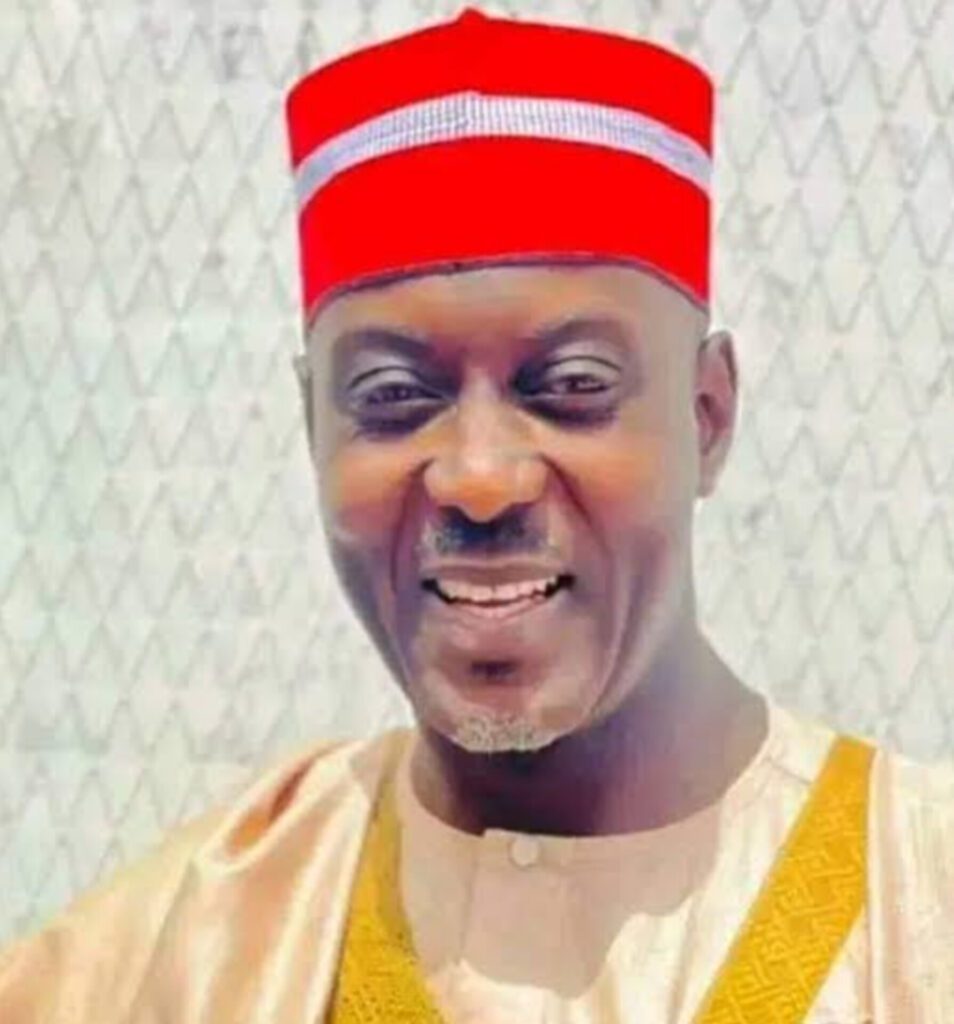
For weeks, the name of Abdullahi Ibrahim Rogo, the Director General of Protocol to the Kano State Government, has been dragged into public debate over alleged financial mismanagement said to involve billions of naira. Headlines and whispers painted him as the face of a scandal, with claims that N6.5 billion and another N1 billion were directly tied to his office. In the court of public opinion, rumours ran faster than facts. Yet, recent revelations have begun to place matters in proper perspective—painting not a picture of guilt, but one of vindication.
The turning point came through the BBC Hausa Service, where a senior Director of the Independent Corrupt Practices and Other Related Offences Commission (ICPC) gave a rare clarification. In the interview, he stated unequivocally that the anti-graft body had not established any evidence linking Abdullahi Ibrahim Rogo to fraud.

He further explained that the oft-quoted figure of N6.5 billion was not, as many assumed, a sum looted or stolen, but rather inflows under the Protocol Directorate cash movements connected to the high-demand nature of protocol operations.
The Director also dismissed the widespread claims about “recovered” funds. He revealed that the much-publicized N1 billion naira was not traced to Rogo’s personal accounts, nor was it “recovered” from him as the rumours suggested. Instead, the transactions were linked to some companies that remain under investigation.
Indeed, this distinction is critical: the funds in question are under scrutiny, yes, but they do not involve Rogo’s name, accounts, or personal enrichment. The Director was clear that, at present, there is no incriminating evidence against the DG Protocol.
If there were still doubts, the judiciary has now put them to rest. In a landmark judgment, the High Court, after reviewing the facts and evidence before it, delivered judgment in favour of Rogo. Importantly, the decision was not on “technical grounds” or legal loopholes, but on the merit of evidence. The court affirmed that since anti-graft agencies had failed to link Rogo to any fraud, there was no basis for him to be treated as a suspect, harassed, or hounded. It therefore issued a final order enforcing his fundamental rights, declaring that he should neither be arrested nor invited in connection with the matter.
But beyond the clarifications and the judgment lies a higher point of law. Section 36(9) of the 1999 Constitution of the Federal Republic of Nigeria enshrines the principle of double jeopardy—non bis in idem. It guarantees that no individual can be tried or punished twice for the same offence once acquitted or discharged by a court of competent jurisdiction. In this context, it is worth stressing that the Economic and Financial Crimes Commission (EFCC), a sister anti-graft agency, had previously investigated these same allegations against Rogo and closed the case without establishing guilt. On the strength of the double jeopardy principle, the ICPC lacks the legal right to reopen what has already been laid to rest by the EFCC. To do so would amount not only to an abuse of process but a breach of the constitutional safeguards that protect every Nigerian from repeated persecution under different guises.
Therefore, taken together, these developments reveal how misinformation can cloud the truth in the heat of political contestation.
As mentioned earlier, Protocol, as a government unit, is often misunderstood. It handles massive cash flows because its responsibilities are immediate, cash-intensive, and highly visible—chartering vehicles, booking hotels, paying for receptions, hosting dignitaries, and securing last-minute logistics. These funds move in and out quickly, often without leaving behind physical infrastructure to “justify” them in the public eye. It is this visibility, coupled with political mischief, that makes the office an easy target for allegations.
Yet, with the ICPC’s clarification as reported in the BBC Hausa interview, the High Court judgment, and the constitutional guarantee against double jeopardy, the facts now stand firm: Abdullahi Ibrahim Rogo has not been found guilty of fraud, nor has any evidence linked him to the inflows under investigation.
Perhaps, what was painted as a scandal is now being revealed as little more than a storm of speculation.
It is worth noting that the agencies probing the matter have themselves acknowledged that Rogo is not incriminated. In fact, the ICPC official’s words serve not just as a clarification, but as a quiet exoneration. Therefore, if the investigators say they have no evidence against him, if the courts of law uphold his innocence, and if the Constitution bars further investigation under the principle of double jeopardy, what remains are only the voices of political detractors who thrive on controversy.
The lesson is simple: justice is best served by facts, law, and fairness—not rumours. Abdullahi Ibrahim Rogo has, through evidence and constitutional protection, been cleared. It is only fair that his name be restored to the honour it deserves, and that the Directorate of Protocol, a nerve-centre of governance, be allowed to perform its duties without the weight of politically motivated distractions.
Ismail Yahaya, writes from Kano